
blog
How ClusterControl Saved Christmas – Part 2
Freedom Isn’t Free When You’re Stuck in Someone Else’s Cloud
Welcome to the second of a 6 part holiday series called, How ClusterControl Saved Christmas! If you missed part one, start here: Part 1
A Familiar Chain in the Code
By February, the snow outside the North-Pole data center had melted just enough for the reindeer to sun themselves beside the fiber conduits. Inside, morale was high.
The repatriation project was ahead of schedule. Dashboards gleamed green.
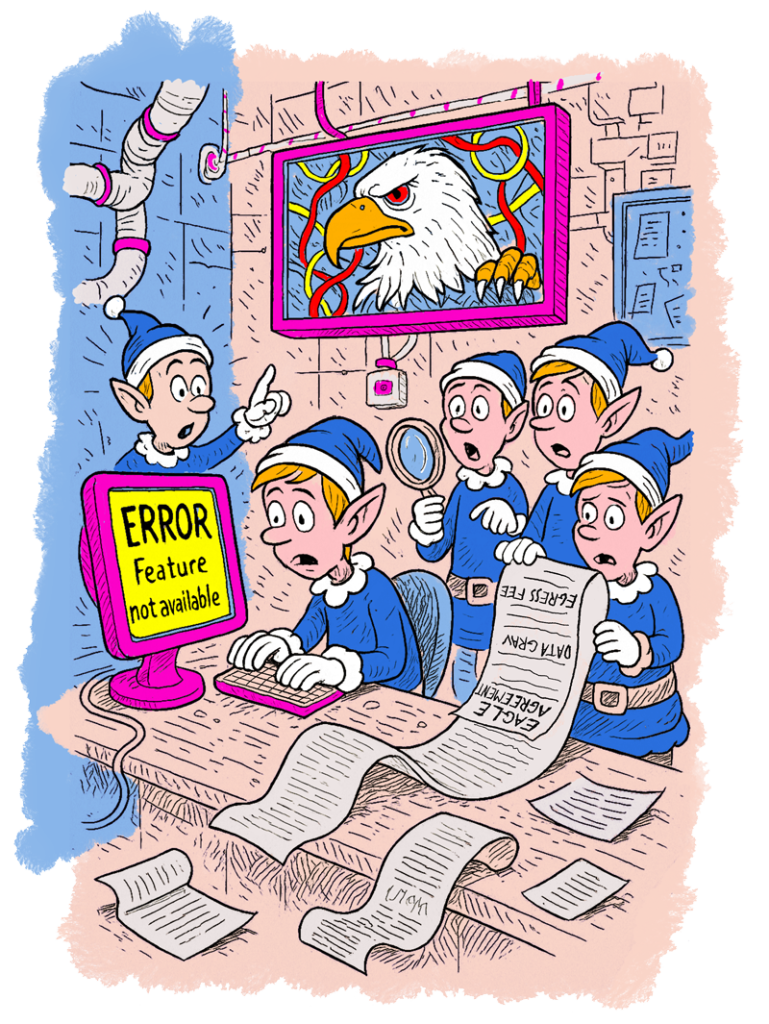
Then — one morning — Twinkle ran a routine export job to migrate the “NaughtyBehavior_Archive” table from Bald Eagle Cloud Storage to their new on-prem node.
The console blinked an unhelpful message:
Error 403: Feature only available in Bald Eagle Cloud Enterprise Plus Tier.
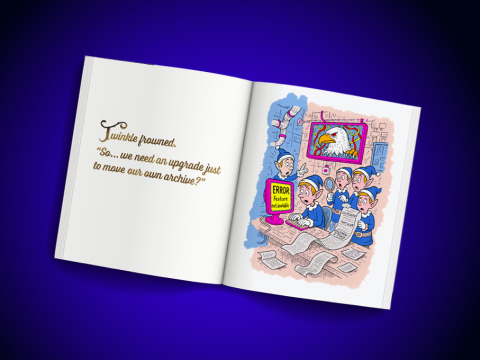
Twinkle frowned.
“So… we need an upgrade just to move our own archive?”
The Decision: Bring the Data Home
Santa leaned forward.
The Hidden Hooks
Digging deeper, the elves uncovered the fine print inside the hyperscaler’s Festive Customer Agreement:
Proprietary APIs: half their automation scripts relied on cloud-specific magic that wouldn’t run anywhere else.
Forced Feature Tiers: essential capabilities like export controls, retention settings, and advanced audit logs had quietly been moved into higher-priced service levels.
Managed Service Dependency: Bald Eagle’s managed database stored key metadata inside internal system tables that couldn’t be exported without refactoring.
They had traded magic shackles for digital ones.
Santa reviewed the findings and sighed.
“We escaped the tower, but the chains were in the code all along.”
The Elvish Assessment
The team assembled a tongue-in-cheek slide deck titled Operation Free-Range Data.
Their conclusion: vendor lock-in wasn’t a technical glitch — it was the business model.
- Every “value-added” feature increased dependency.
- Every managed-service abstraction hid complexity they no longer controlled.
- Every premium tier introduced a paywall around core functionality.
For elves raised on open protocols and clear rules, this was heresy.
Re-Engineering Freedom
The North-Pole engineers devised a counter-spell.
- Abstraction through ClusterControl:
They replaced provider-specific tooling with a neutral control plane. MySQL and PostgreSQL clusters now followed the same playbook, no matter where they lived. - Standardization of APIs:
All automation refactored around open interfaces and ordinary SQL commands — no secret vendor runes. - Portable Backups:
Using ClusterControl’s scheduling engine, backups were stored in elf-managed vaults and mirrored to whichever cloud region offered the best peppermint-per-gigabyte price that week. - Cost Transparency:
A new dashboard, “True Cost of Magic,” tracked every query’s cloud footprint.
Slowly, the dependencies dissolved. The elves could move workloads at will — a freedom they hadn’t felt since the early parchment days.
Lessons from the Lock-In
The elves documented their findings for the North-Pole Technical Review Board:
| Risk | Cloud Reality | North-Pole Solution |
| Proprietary APIs | Scripts break outside one vendor’s realm | Adopt open-source orchestration via ClusterControl |
| Forced Feature Tiers | Essential capabilities locked behind expensive SKUs | Bring critical functions back in-house |
| Opaque Monitoring | Vendor dashboards hide internals | Centralized, vendor-neutral observability |
| Managed-Service Dependency | Metadata trapped inside proprietary tables | Automated, repeatable provisioning templates |
Their conclusion: true agility demands independence.
The Customer Parallel
Every modern enterprise knows this feeling. The allure of convenience — “just one click to deploy” — often conceals years of dependency.
Lock-in starts small: a managed service here, an analytics feature there. Then one day a feature you rely on moves behind a premium tier, or compliance asks for an audit log you can’t access, and you realise the cloud you chose isn’t the cloud you control.
The North Pole simply learned that lesson earlier — with candy canes instead of contracts.
ClusterControl’s Role
ClusterControl became the elves’ escape hatch.
- Cross-Environment Standardization: identical configuration for on-prem, private, and public clouds.
- Unified Monitoring: one dashboard to rule all nodes — no proprietary consoles required.
- Automated Deployment: deploy or migrate clusters without touching vendor APIs.
- Sovereign foundation: workload access and portability.
With every migration complete, Santa updated the operations manual:
“The North Pole shall depend on no single vendor,
nor any provider that charges extra for sleigh bells.”
? Takeaway
Vendor lock-in doesn’t just threaten budgets — it limits imagination.
By reclaiming their architecture through open tools and a unified control plane, Santa’s workshop proved that true freedom in the cloud starts with control on the ground.
Continue the story with Part 3